


Panama Canal under pressure as containership pays $4 million
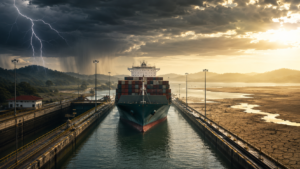

A 10,100 TEU containership reportedly paid about US$4 million to secure priority transit through the Panama Canal, as surging demand and renewed water concerns put the key maritime gateway under growing pressure.
The Seaspan Benefactor was reported as the buyer of the auctioned transit slot, allowing the vessel to move ahead of ships waiting to cross the Canal, according to The Guardian. Ships were waiting about 10 days for passage at the time. The US$4 million payment was reportedly more than double the average auction bid over the previous seven days.

The payment was not the vessel’s normal Panama Canal toll. The Panama Canal Authority (ACP) operates daily auctions that allow shipowners to bid for priority when congestion and demand are high.
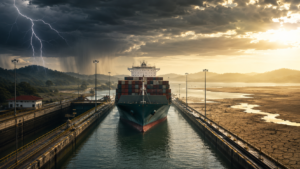
The pressure is coming from two directions. More vessels are avoiding the Gulf and Red Sea amid fighting involving Iran, increasing demand for alternative routes. At the same time, falling water levels and the developing El Niño are raising concerns over the Canal’s ability to maintain current operating conditions.
Panama Canal tightens draft restrictions
Water pressure is already translating into operational changes.
The ACP has been reducing the maximum authorized draft for vessels using the Neopanamax locks, which accommodate the largest ships transiting the waterway. The restrictions are based on water levels and projected conditions at Gatún Lake, the reservoir that plays a central role in Canal operations.
For container shipping, lower draft limits have a direct consequence. Heavily loaded vessels sit deeper in the water. Therefore, as the permitted draft falls, ships approaching the limit may have to reduce the amount of cargo they carry.
This is particularly significant for large containerships, where even relatively small changes in allowable draft can affect usable carrying capacity.
For now, however, the situation has not reached the severity of the water crisis that disrupted the Canal in 2023 and 2024.
Why El Niño matters
The Panama Canal’s vulnerability to El Niño comes down to one critical resource: freshwater.
Water is essential to the operation of the Canal’s lock system. At the same time, the water resources supporting the Canal provide drinking water to more than half of Panama’s population, according to the ACP.
The authority has been monitoring the potential return of El Niño since late 2025. In anticipation of an event developing during the second half of 2026, it maintained Gatún Lake at historically high levels and introduced preventive water-saving measures.
El Niño can bring reduced rainfall to Panama, limiting the amount of water replenishing the Canal’s reservoirs. If dry conditions persist, falling lake levels can eventually force the ACP to tighten restrictions on shipping.
The risks became particularly clear during the 2023–2024 drought.
In October 2023, rainfall in the Canal watershed was 41% below normal, making it the driest October since records began 73 years earlier. The ACP said the drought caused by El Niño reduced water availability and pushed Gatún Lake to unprecedentedly low levels for that time of year.
The authority responded by progressively reducing reservation slots to conserve freshwater. Planned availability fell from 25 slots in early November to 22 in December, 20 in January and 18 from February 2024.
Better prepared this time
There is an important difference between then and now.
The ACP began preparing for the potential 2026 El Niño well in advance, introducing water-saving measures in late 2025 and strengthening reserves in Gatún and Alhajuela lakes during unusually wet conditions earlier this year.
The authority said its projections did not indicate a need to restrict daily transits through the end of 2026, while it continues to update lake-level projections and monitor the developing climate conditions.
However, the longer-term outlook remains important. The ACP has noted that the strongest effects of moderate or strong El Niño events have historically tended to become more apparent in the following year. As a result, it is already developing operational projections for 2027.
Two pressures converge
The immediate challenge for the Panama Canal is therefore not El Niño alone.
Geopolitical disruption in the Middle East is pushing more shipping demand towards the waterway just as water availability is again becoming an operational concern. The reported US$4 million payment by the Seaspan Benefactor offers a striking illustration of the value shipowners are placing on avoiding delays under these conditions.
But the key issue for container shipping will be what happens next.
The Canal is not yet experiencing a repeat of the 2023–2024 crisis, and the ACP has entered the current period with stronger water reserves and preventive measures already in place.
Still, if El Niño leads to prolonged rainfall deficits and Gatún Lake comes under greater pressure, the question will be whether draft restrictions remain sufficient or whether tighter constraints on vessel transits eventually become necessary.
For container shipping, that makes Panama’s rainfall and reservoir levels almost as important to watch as the growing queue of vessels waiting to cross the Canal.
The post Panama Canal under pressure as containership pays $4 million appeared first on Container News.
Content Original Link:
" target="_blank">