

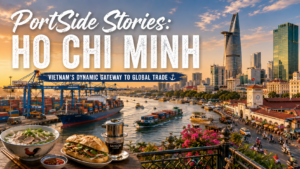
PortSide Stories: Ho Chi Minh
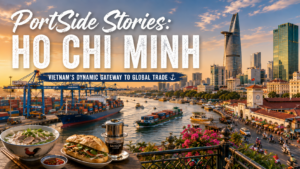

PortSide Stories: Ho Chi Minh
Vietnam’s Dynamic Gateway to Global Trade
Ho Chi Minh is Vietnam’s largest economic center and one of Southeast Asia’s most important hubs for trade and logistics. Located along the Saigon River, the city has developed around maritime commerce for generations.
Today, Ho Chi Minh is served by a network of ports and terminals rather than a single container port. These facilities connect southern Vietnam’s factories, businesses and consumers with markets around the world.
Among them, Tân Cảng–Cát Lái plays a major role in container shipping. Saigon Port also operates port facilities in the city and handles containerized cargo alongside other types of freight.
Beyond the waterfront, Ho Chi Minh offers bustling markets, historic landmarks, vibrant neighborhoods and one of Asia’s most exciting food scenes.
Ho Chi Minh: A Major Container Gateway
Container shipping plays an important role in Ho Chi Minh’s economy.
Tân Cảng–Cát Lái is a key container facility serving the city and southern Vietnam. Containers move between ships, barges and trucks as goods travel to and from the region’s major industrial areas.
However, Cát Lái is only part of the wider maritime landscape. Saigon Port operates facilities including Tân Thuận and Hiệp Phước in Ho Chi Minh City. Its activities include port operations and logistics, while its facilities can handle containerized cargo, general cargo and other freight.
Together, these port and terminal operations help make Ho Chi Minh one of Vietnam’s most important gateways for international trade.
A City Shaped by the Saigon River
Ho Chi Minh’s relationship with maritime trade stretches back more than a century.
Long before it became Vietnam’s largest city, busy wharves along the Saigon River and Bến Nghé helped establish the area as an important commercial center. Over time, the port system expanded alongside the city’s industries and growing international connections.
Today, that relationship with the water remains easy to see. Commercial vessels, barges and smaller craft continue to navigate the waterways around the city.
At the same time, new waterfront developments are transforming parts of the riverfront into modern urban districts.
Taste the Flavors of Ho Chi Minh
Ho Chi Minh is one of Southeast Asia’s great food destinations.
Start with phở, Vietnam’s famous noodle soup. Then try bánh mì, a crispy baguette filled with meat, vegetables, herbs and sauces.
Another local favorite is cơm tấm, or broken rice. It is often served with grilled pork, egg and pickled vegetables.
You can also try bánh xèo, a crispy savory pancake typically filled with shrimp, pork and bean sprouts.
Finally, cool down with a strong Vietnamese iced coffee mixed with condensed milk.
Discover Ho Chi Minh’s Historic Landmarks
Begin at the Saigon Central Post Office, one of the city’s most recognizable historic buildings.
Nearby stands the Notre-Dame Cathedral Basilica of Saigon, another landmark from the city’s colonial era.
Continue to the Independence Palace, an important site in Vietnam’s modern history.
For visitors interested in learning more about the country’s twentieth-century past, the War Remnants Museum offers extensive historical exhibitions.
Explore the Markets and Neighborhoods
No visit to Ho Chi Minh is complete without experiencing Ben Thanh Market.
Inside, stalls sell everything from local food and coffee to clothing, souvenirs and handicrafts.
Don’t forget to explore Chợ Lớn, the city’s historic Chinatown. Markets, temples and traditional businesses give the district its distinctive character.
Later, head toward Nguyen Hue Walking Street and the Saigon River. Here, historic buildings stand beside the modern skyline of one of Asia’s fastest-changing cities.
Experience Ho Chi Minh from the Water
A trip along the Saigon River offers a completely different perspective.
From the water, visitors can see modern towers, residential neighborhoods and maritime activity sharing the same urban landscape.
The river also provides a reminder of why Ho Chi Minh developed into such an important trading center. Waterways have long connected the city with southern Vietnam and the wider Mekong region.
Today, they remain an important part of the region’s transport and logistics network.
Ho Chi Minh in Motion
Across Ho Chi Minh’s port network, containers move between vessels, terminals, barges and trucks. At Cát Lái, container operations connect southern Vietnam’s economic heartland with international shipping routes.
Elsewhere, Saigon Port’s facilities continue a maritime tradition that has shaped the city for generations.
Meanwhile, life continues along the Saigon River. Boats cross the water as markets fill with people and the city’s skyline rises above the waterfront.
Ho Chi Minh is more than Vietnam’s economic center.
It is a city where ports, rivers, industry and everyday life come together at one of Southeast Asia’s most dynamic gateways to global trade.
The post PortSide Stories: Ho Chi Minh appeared first on Container News.
Content Original Link:
" target="_blank">