


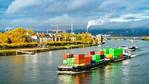
Record low water levels in Europe's major rivers have curtailed the transport of goods, reduced electricity output and shrunk company earnings, stoking fears about the economic impact of searing heat and erratic
Record low water levels in Europe's major rivers have curtailed the transport of goods, reduced electricity output and shrunk company earnings, stoking fears about the economic impact of searing heat and erratic rainfall.
As Europe experiences the fastest warming of any continent and record-breaking heatwaves, drought has exposed the need to reconsider business practices.
From the bustling port of Rotterdam to hydropower plants in Serbia, waterways have become a less reliable way to transport goods such as grains and oil, or to produce much-needed electricity when millions are seeking to cool their homes.
"It's affecting not one region like we've seen in the past, but the whole European landscape," said Alessandro Armenia, a power analyst at commodities data and analytics firm Kpler.
"Given the current dynamics, it means either we're going to see blackouts or we need to invest way more."
HYDROPOWER AND NUCLEAR OUTPUT CUT
Production of nuclear power in Hungary and hydropower in Serbia have fallen because of record low water levels along the Danube, which passes through major cities like Vienna, Budapest and Belgrade on its route from Germany to the Black Sea.
The Paks nuclear power plant, which generates nearly half of Hungary's electricity,
Content Original Link:
" target="_blank">