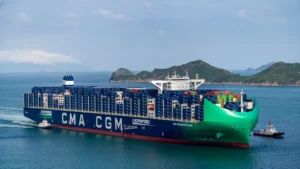





The American maritime industry depends on policy that supports economic growth and investment and protects national security; however, recent policy decisions have too often relied on broad administrative actions and outdated assumptions
The American maritime industry depends on policy that supports economic growth and investment and protects national security; however, recent policy decisions have too often relied on broad administrative actions and outdated assumptions rather than modern, data-driven approaches. The extension of the Jones Act waiver and the continued use of rigid seasonal dredging windows illustrate this trend. Though distinct issues, both carry significant consequences for maritime investment, operational efficiency, and the long-term strength of the maritime industry.
A Brief Discussion on the Jones Act Waiver
The Jones Act (Section 27 of the Merchant Marine Act) of 1920 mandates that all vessels transporting goods between ports in the United States be built in the United States, owned by U.S. citizens, registered under the U.S. flag, and crewed by American mariners. This law has successfully protected the domestic maritime industry from foreign interference in our national and economic security. It supports national security interests by maintaining a reliable supply of trained mariners who are needed during national emergencies and overseas conflicts. It also fosters an American manufacturing base by requiring that the ships be built in America and owned by U.S. companies.
In response to Iran’s blockade on the Strait of Hormuz, on
Content Original Link:
" target="_blank">