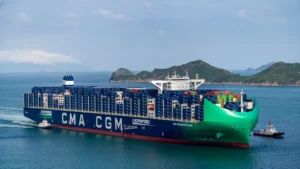






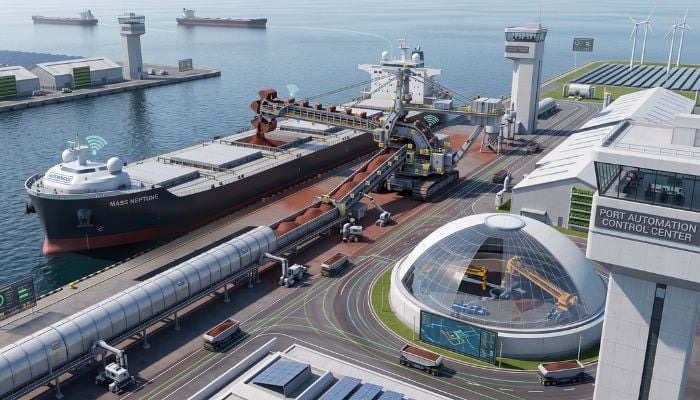
Think of a bulk carrier which arrives at a port, and instead of moving to a berth, it has to drop its anchor off the coast and wait.
A similar incident happened at a major bulk terminal on the east coast of South Africa, where some ships had to wait for 26 days to get a berth, against an industry benchmark of 50 to 67 hours.
This delay was due to many different causes, including non-availability of berths for a large bulk carrier, or a shortage of tugboats at the facility, disruptions caused by powerful winds or rough seas, mismatched scheduling rules and repairs which had to be stopped midway due to missing parts.
Without a centralised system which would let different parts of a port share information in real-time, issues which can be solved easily can easily compound into bigger problems, taking weeks to resolve.
The consequences are not limited to the operation itself, rather affects other tasks as well, much like a domino effect.
If container terminals, bulk, breakbulk and RORO
Content Original Link:
" target="_blank">