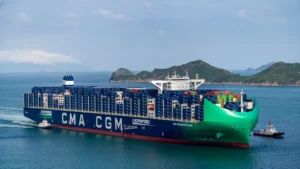


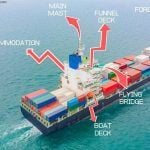
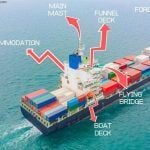
All types of cargo ships, be it container vessels, bulk carriers, oil tankers or Ro-Ro vessels, have 3 main parts: namely the hull, the engine room and the navigation bridge. Understanding their role is important, along with categorising other structures, both visible, including the bow, propeller, stern and rudder, and those which are hidden, such as cargo holds, ballast tanks, bulkheads, etc which will be discussed in this article to offer a clear understanding of a modern ship’s anatomy.
Primary Structural Parts Of A Ship
Hull
It is a ship’s watertight body which keeps it buoyant or afloat. All other components are connected to it or sit within the hull, which might be open or partially covered with a deck. A hull has several watertight decks and bulkheads. Most hulls are built of steel, which makes them sturdy enough to withstand saltwater, powerful waves and rough weather.
The Keel
Just like a human spine supports the body, the keel supports the entire frame of a ship. It runs from the bottom centreline along the length of the vessel from the front to the back, i.e
Content Original Link:
" target="_blank">