




Do you know Singapore leads in shipping and longevity?
What does it take to become a global leader in shipping and a place where people live longer, healthier lives? Singapore offers an interesting example.
Renowned for its strategic location, world-class port infrastructure and maritime expertise, the city-state consistently ranks among the world’s leading shipping hubs. Yet, beyond its maritime achievements, Singapore has gained another distinction: recognition as the world’s sixth Blue Zone, where public policies, urban planning and healthier lifestyles contribute to longevity.
Although seemingly unrelated, these two achievements reveal how long-term planning, innovation and investment in people can shape both economic success and quality of life.
Singapore: A global leader in maritime excellence
Strategically positioned along major East–West shipping routes, Singapore has established itself as one of the world’s most important maritime centres. Its influence extends well beyond port operations, encompassing ship management, maritime finance, insurance, legal services, technological innovation and international trade.
According to the Leading Maritime Cities of the World 2026 report, published by DNV and Menon Economics, Singapore retained its position as the world’s leading maritime city. Shanghai ranked second, followed by London, Rotterdam and Tokyo.
The study evaluated 50 maritime cities using 48 indicators across five areas: shipping, maritime finance and law, maritime technology, ports and logistics, and attractiveness and competitiveness. More than 200 maritime experts contributed to the assessment.
Commenting on the findings, Erik W. Jakobsen, Partner and Chairman of Menon Economics, highlighted the changing geographical balance of the maritime industry. Asia now accounts for three of the world’s five leading maritime cities, compared with two in 2024, while established European centres continue to benefit from their maritime services and industrial clusters.
Singapore’s leadership is also reflected in the 2026 Xinhua-Baltic International Shipping Centre Development Index, which ranked the country first for the 13th consecutive year, with a score of 99.32 out of 100. Shanghai followed with 84.27, while London ranked third with 81.80.
As reported by SAFETY4SEA, the index assesses maritime centres based on port performance, professional maritime services and the wider business environment.
The figures behind Singapore’s position are equally significant. According to the country’s Ministry of Transport, in 2025:
- Container throughput reached a record 44.66 million TEUs.
- Annual vessel arrival tonnage reached 3.22 billion gross tonnage.
- Singapore maintained connections with more than 600 ports worldwide.
- More than 200 international shipping groups operated offices in the country.
Singapore also remained the world’s largest bunkering port, with marine fuel sales reaching a record 56.77 million tonnes in 2025.
These achievements reflect how Singapore has combined its strategic geographical position with sustained investment in infrastructure, maritime expertise, innovation and international collaboration.
But did you know Singapore is also a Blue Zone?
Beyond its maritime achievements, Singapore has attracted international attention for the longevity of its population.
In 2023, longevity researcher and National Geographic explorer Dan Buettner identified Singapore as the world’s sixth Blue Zone, introducing it as a “Blue Zone 2.0.”
The concept of Blue Zones refers to communities where people have traditionally experienced unusually long lives, often associated with healthier lifestyles, stronger social relationships and lower rates of certain chronic diseases.
The five original Blue Zones identified by Buettner are Okinawa in Japan, Sardinia in Italy, Nicoya in Costa Rica, Ikaria in Greece and Loma Linda in California.
Unlike these communities, where longevity is associated with established cultural traditions and everyday habits, Singapore represents a different model.
As explained in a BBC Travel feature, Singapore’s designation reflects the role of public policies, urban infrastructure and social planning in supporting healthier lifestyles.
Buettner has described Singapore as an engineered Blue Zone, where healthier living has been encouraged through deliberate decisions concerning transport, healthcare, housing and the urban environment.
The country’s longevity statistics support its reputation for long life. According to the Singapore Department of Statistics, life expectancy at birth reached 83.9 years in 2025, compared with 82.9 years in 2015. The figures show life expectancy of 81.8 years for men and 86.0 years for women.
However, the Blue Zone designation should be understood as Buettner’s longevity framework rather than an official public-health classification. The methodology and evidence underlying Blue Zone designations have also attracted scientific debate.
What makes Singapore’s approach to longevity different?
Singapore’s approach illustrates how everyday environments can influence health-related behaviour. Rather than relying entirely on individuals to adopt healthier lifestyles, the city-state has developed policies intended to make physical activity, preventive healthcare and social interaction more accessible.
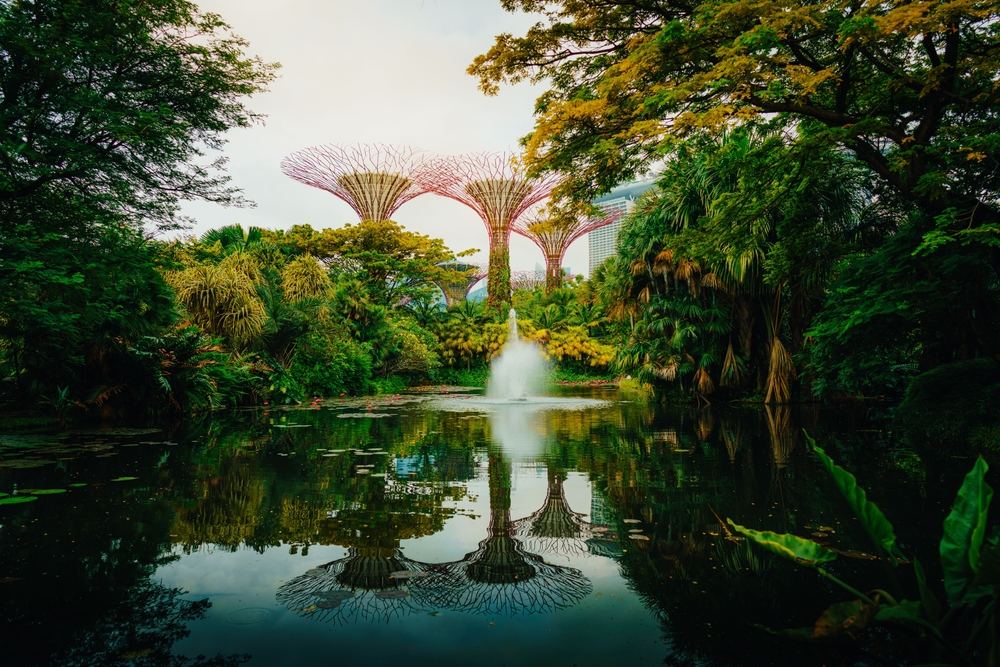
Urban planning and everyday movement: Singapore’s extensive public transport network, pedestrian infrastructure, parks and green spaces encourage residents to incorporate walking into daily routines.
In the BBC feature, Charu Kokate, Senior Partner at Safdie Architects, highlighted the importance of integrating parks, gardens and nature reserves into the urban landscape. She described Singapore’s approach to efficient land use and green spaces as a defining feature of its urban planning.
Preventive healthcare: In July 2023, Singapore introduced Healthier SG, a national initiative designed to strengthen preventive healthcare. The programme encourages eligible residents to establish ongoing relationships with family doctors, undergo health screenings and develop personalised health plans.
Social connection and active ageing: Through the Age Well SG programme, Singapore is investing in community facilities, accessible environments and opportunities for older residents to remain socially engaged and physically active.
The government has allocated S$3.5 billion over a decade to support the programme, covering community care, housing, transport and active ageing.
Nutrition and healthier choices: Public-health initiatives also aim to influence dietary behaviour. Singapore has introduced nutritional labelling requirements and other measures to encourage healthier food and beverage choices.
According to the country’s Ministry of Health, the 2025 National Nutrition Survey found that average daily sugar intake had declined from 60 grams in 2018 to 48 grams in 2025. Nevertheless, increasing calorie, fat and sodium consumption remains a concern.
What connects maritime leadership and longevity?
At first glance, Singapore’s shipping industry and the longevity of its residents may appear to be unrelated achievements. However, both reveal the importance of coordinated planning and investment in systems that support long-term outcomes.
Singapore’s maritime development has depended on more than its advantageous geographical location. Investment in advanced port infrastructure, maritime services, education, digitalisation and international partnerships has enabled the city-state to develop a competitive maritime ecosystem.
Similarly, its approach to population health demonstrates how transport, housing, healthcare and community infrastructure can influence everyday behaviour.
The connection is not that maritime development causes longevity. Rather, Singapore provides an example of how long-term policy choices can shape different aspects of economic and social performance.
What makes Singapore’s experience particularly interesting is its long-term approach to development. In both maritime competitiveness and public health, the city-state has invested in infrastructure, institutional capacity and policies designed to deliver lasting results.
Although these achievements concern different areas, they illustrate how coordinated planning can influence economic performance and quality of life. Singapore’s example also highlights the importance of looking beyond immediate outcomes and considering how today’s investments shape future opportunities and challenges.
A model for sustainable development?
Singapore’s experience also connects with the United Nations Sustainable Development Goals.
Its longevity initiatives are particularly relevant to SDG 3 – Good Health and Well-being, which promotes healthy lives and wellbeing for all ages, and SDG 11 – Sustainable Cities and Communities, which addresses inclusive, safe, resilient and sustainable urban development.
Meanwhile, Singapore’s maritime policies and investments contribute to wider discussions around sustainable infrastructure, innovation and environmental responsibility, including SDG 9 – Industry, Innovation and Infrastructure.
Although Singapore’s maritime and public-health achievements are measured through different frameworks, both demonstrate the potential value of long-term investment and coordinated action.
Singapore’s position as a leading maritime hub and its recognition as a Blue Zone offer two different perspectives on the city-state’s development. One reflects its influence on global shipping and trade; the other, its efforts to improve the health and longevity of its population. Together, they provide an interesting picture of a country whose ambitions extend beyond economic growth.
Content Original Link:
" target="_blank">