
The arrival of a Sea Legend containership in the UK via the Northern Sea Route marks another step towards scheduled
The arrival of a Sea Legend containership in the UK via the Northern Sea Route marks another step towards scheduled Arctic container shipping, although safety, environmental, infrastructure and geopolitical constraints continue to limit the route’s wider potential.
China-Europe container shipping through the Arctic is moving beyond isolated trial voyages, as Chinese carrier Sea Legend seeks to establish a regular seasonal service along Russia’s Northern Sea Route (NSR).
The 1,740-TEU Dubai Tower arrived at Teesport in northeast England on September 9, following a voyage from China through the Russian Arctic. The vessel departed Ningbo-Zhoushan on August 15, subsequently calling at Shanghai, Taicang and Qingdao before leaving China on August 19 for the Northern Sea Route. It carried approximately 1,370 TEU, including energy-storage equipment, batteries and other manufactured goods.
The voyage is the first of eight sailings planned by Sea Legend during the 2026 Arctic navigation season and represents a notable step in efforts to move Arctic container shipping from individual demonstration voyages towards a more structured seasonal service.
From trial voyage to scheduled service
Sea Legend has scheduled eight sailings between China and northern Europe between August and October under its China-Europe Arctic Express (CAX).
According to the carrier’s published schedule, seven small and medium-sized containerships are being deployed, with weekly departures originally planned from Ningbo. Cargo can also be consolidated from several other Chinese ports, while European coverage has included the UK, Rotterdam, Hamburg, Wilhelmshaven and Gdynia.
The programme follows an Arctic container voyage operated by Sea Legend in 2025 and marks a shift towards fixed departures and repeated vessel deployment rather than a single experimental crossing.
The first 2026 voyage also illustrates some of the operational questions such services will need to address. Felixstowe had originally been identified as the first UK destination for Dubai Tower, with an expected arrival in early September. Instead, the vessel called at Teesport on September 9, a port that had not initially appeared in the published rotation.
For a service seeking to establish itself as a viable logistics alternative, schedule reliability and predictable port calls will therefore be as important as headline transit times.
Why the Arctic route is attracting attention
The main attraction of the Northern Sea Route is distance.
Running along Russia’s Arctic coastline between the Bering Strait and the Barents Sea, the NSR can significantly shorten voyages between Northeast Asia and northern Europe compared with traditional routings through the Suez Canal.
Sea Legend has promoted transit times of around 20 days between China and Europe, while conventional Asia-Europe ocean services can take considerably longer, particularly amid disruption affecting established trading corridors.
The renewed interest comes at a time when geopolitical tensions and disruption across major shipping routes are placing greater emphasis on supply-chain resilience and route diversification.
However, shorter distance alone does not make a trade route commercially or operationally equivalent to established liner networks.
Major Asia-Europe services rely on large vessels, extensive port networks, year-round frequency and highly developed logistics infrastructure. By comparison, Sea Legend’s Arctic programme remains relatively small and is limited to the seasonal navigation window.
Arctic navigation brings distinct safety challenges
The potential commercial benefits of Arctic navigation come with a very different risk profile.
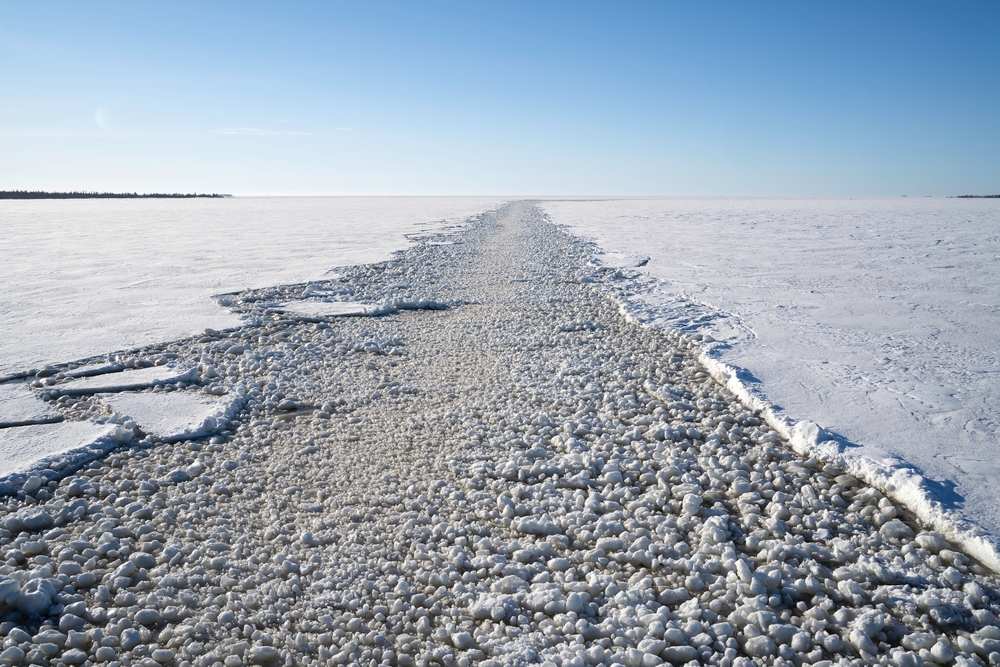
The International Maritime Organization (IMO) highlights poor weather, limited charting, communications constraints, insufficient navigational aids, extreme cold and ice as particular challenges for ships operating in polar waters. The remoteness of Arctic areas can also make rescue operations and pollution response considerably more difficult and costly.
Ships operating within the relevant polar areas are subject to IMO’s mandatory Polar Code, which addresses ship design and construction, equipment, operational procedures, voyage planning, crew training, search and rescue and environmental protection.
Depending on their operation, ships must meet applicable Polar Code requirements, including certification and the carriage of a Polar Water Operational Manual to support decision-making by masters and crews.
Recent casualty data also underline the risks.
According to Allianz Commercial’s Safety and Shipping Review 2026, more than 500 shipping incidents were reported in Arctic Circle waters during the past decade, with machinery damage or failure accounting for almost half. Allianz also identifies harsh conditions, limited infrastructure, territorial issues and sanctions as factors complicating Arctic operations.
Environmental concerns remain in focus
Greater use of Arctic shipping routes also raises significant environmental questions.
While changing ice conditions can make some Arctic waters more accessible during parts of the year, increased vessel activity brings greater exposure to emissions, underwater noise and pollution risks in a particularly sensitive environment.
The consequences of an accident may also be magnified by the region’s remoteness, low temperatures and limited emergency-response infrastructure.
IMO’s Polar Code therefore includes mandatory pollution-prevention measures alongside its safety provisions, covering areas including oil, noxious liquid substances, sewage and garbage.
This means that any expansion of Arctic shipping will inevitably be judged not simply on speed and economics, but also on whether growth can be managed without undermining safety or the protection of the polar environment.
Can the Northern Sea Route become a mainstream alternative?
For now, the scale of Arctic container shipping remains small compared with established Asia-Europe trades.
The navigation season is limited, specialised operational expertise is required, insurance and emergency-response considerations are more complex, and much of the route follows Russia’s Arctic coastline. Political and sanctions-related developments can therefore also influence its commercial attractiveness.
Yet Sea Legend’s move from an individual voyage to eight planned sailings is still significant.
The question is gradually shifting from whether ships can transport containers between China and Europe through the Arctic to whether such services can operate repeatedly, reliably and commercially.
The 2026 season will provide an important test.
For the foreseeable future, developments point to the Northern Sea Route taking on a niche role within the Asia-Europe trade network, particularly during the Arctic navigation season.
Whether that role can expand will depend on safety performance, infrastructure, economics, geopolitical conditions and, importantly, the ability of operators to deliver predictable schedules over successive seasons.
Content Original Link:
" target="_blank">