



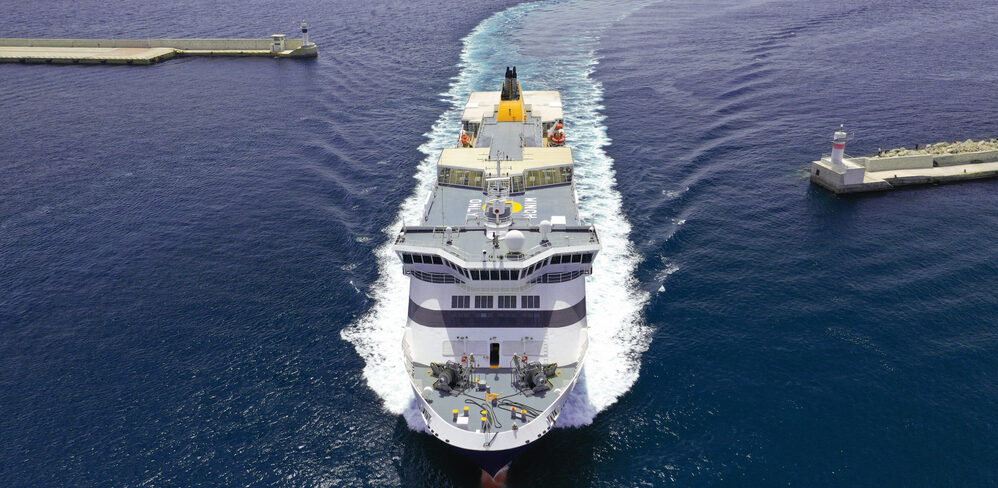
Interferry has warned that further delays to carbon pricing for road transport could undermine the competitiveness of European ferry services,
Interferry has warned that further delays to carbon pricing for road transport could undermine the competitiveness of European ferry services, potentially encouraging freight to shift from sea to road despite the EU’s transport decarbonization objectives.
In a statement issued, the ferry industry association raised concerns over ongoing negotiations concerning the EU Emissions Trading System (EU ETS), arguing that differences in the timing of carbon pricing between maritime and road transport are creating an uneven competitive environment.
According to Interferry, European ro-ro and ro-pax operators face an estimated €1 billion in annual ETS compliance costs, while road freight continues to benefit from delays to its separate emissions trading framework.
Ferry operators face rising costs as road transport avoids ETS2
Since 2024, commercial passenger and cargo vessels of 5,000 GT and above calling at European ports have been included in the EU ETS, with the maritime sector’s obligations being phased in.
In an exclusive interview with SAFETY4SEA, Mike Corrigan, CEO of Interferry, identified the difference in carbon pricing between maritime and road transport as the main reason behind the association’s call for an immediate halt to further phasing-in of the maritime EU ETS. The CEO had argued that the imbalance could undermine the EU’s environmental objectives by encouraging freight and passengers to move away from ferry services towards road transport.
Interferry estimates that current compliance costs are equivalent to approximately €250 per tonne of diesel fuel for affected ferry operators. Meanwhile, the EU’s ETS2, has already been postponed from 2027 to 2028 and faces pressure from several EU member states for further delays.
What is the EU ETS2?
As part of the 2023 revisions of the ETS Directive, a new emissions trading system named ETS2 was created. Separate from the existing EU Emissions Trading System (EU ETS), this new system will cover and address the CO2 emissions from fuel combustion in buildings, road transport and additional sectors (mainly small industry not covered by the existing EU ETS).
Johan Roos, Director of Regulatory Affairs at Interferry, said: “The burdens and challenges of decarbonization cannot be borne by individual sectors alone, and all transport sectors must be treated equally.”
Risk of freight shifting away from ferry services
The central concern is that uneven carbon pricing could have consequences beyond the ferry industry’s operating costs.
Ro-ro and ro-pax services often compete directly with road transport for freight movements, particularly on routes where customers can choose between transporting goods by ferry or using an alternative land connection.
According to Interferry, higher compliance costs make ferry services less competitive and can encourage freight customers to favour road transport.
The association also argues that competitive pressure limits operators’ ability to pass additional costs on to customers, potentially reducing the funds available for investments in cleaner vessels and technologies.
Such a development could conflict with EU efforts to encourage greater use of short-sea shipping as part of transport decarbonization.
However, the extent of any resulting shift from sea to road has not been quantified in the statement, and the environmental consequences would depend on the routes and transport alternatives involved.
Interferry calls for equal carbon pricing and reinvestment
To address the imbalance, Interferry is calling for changes to the structure and implementation of ETS2. Furthermore, The association proposes separating road transport from building emissions under the framework, allowing carbon pricing for road freight to proceed independently of concerns over household heating costs.
Alternatively, it argues that carbon costs should be applied consistently across competing transport sectors.
Interferry is also calling for all revenues generated through maritime ETS compliance to be reinvested in shipping’s decarbonization, particularly through support for:
- Sustainable marine fuels produced within the EU.
- Cleaner vessel technologies.
- Onshore charging infrastructure for ferry operations.
According to the association, redirecting ETS revenues towards these measures would help operators invest in reducing emissions while addressing the financial pressures arising from compliance.
The broader concern is that carbon pricing designed to support decarbonization could produce unintended consequences if competing transport modes face substantially different obligations.
For ferry operators, the issue is therefore not only the cost of EU ETS compliance, but whether the regulatory framework provides consistent incentives for freight transport across sea and road.
Content Original Link:
" target="_blank">