


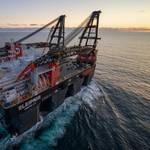
Heerema Marine Contractors has reduced the North Atlantic transit time of its semi-submersible crane vessel (SSCV) Sleipnir by 2.5 days following a voyage optimization…
Heerema Marine Contractors has reduced the North Atlantic transit time of its semi-submersible crane vessel (SSCV) Sleipnir by 2.5 days following a voyage optimization pilot with French ocean intelligence company Amphitrite.
The data-driven pilot reduced the vessel's sailing distance by 240 nautical miles and lowered carbon dioxide (CO2) emissions by up to 18%, while maintaining higher average sailing speeds without increasing fuel consumption.
The optimization program combined Heerema's offshore operational expertise with Amphitrite's vessel-specific voyage optimization platform, which was trained using five years of operational data supplied by Heerema.
The model predicts vessel speed and power consumption under varying weather, wave and ocean current conditions, enabling routing decisions tailored to the vessel rather than relying on conventional weather routing.
Sleipnir, one of the world's largest semi-submersible crane vessels with a lifting capacity of 20,000 metric tonnes, was sailing from Rotterdam to New York to install an offshore wind substation when the pilot was conducted under challenging North Atlantic winter conditions.
During the outbound voyage, the optimization system identified an optimal departure window to benefit from favorable tidal currents in the English Channel before recommending a more northerly route around a developing storm. The route enabled the vessel to take advantage of
Content Original Link:
" target="_blank">