



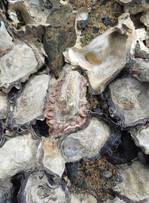
An international study led by Curtin University has put to bed a scientific debate dating back 176 years, confirming that two historically significant oyster species from Western Australia and Fiji are distinct
An international study led by Curtin University has put to bed a scientific debate dating back 176 years, confirming that two historically significant oyster species from Western Australia and Fiji are distinct species. By combining historic museum collections with modern DNA technology, the research provides new insights into marine biodiversity across the Indo-Pacific and helps strengthen the scientific foundation for future conservation efforts.
The research team revisited a long-standing question about the relationship between Saccostrea scyphophilla, first described in 1807 from Bernier Island in Shark Bay, Western Australia, and Saccostrea mordax, described from Fiji in 1850. Since the naming of the oyster in Fiji, scientists have debated whether the two oysters represented separate species or whether they were simply different forms of the same oyster.
Saccostrea scyphophilla is found along WA's coast, across northern and eastern Australia, and the Indo-Pacific, while Saccostrea mordax occurs further north and east from Asia to Fiji.
Using modern DNA sequencing, the research has now confirmed the two oysters are genetically distinct species.
Part of the eDGES (eDNA for Global Environmental Studies) partnership between Curtin University and BHP, the research brought together scientists from Australia, Singapore, Fiji and the United States, combining DNA sequencing with historic
Content Original Link:
" target="_blank">