



Following a year of tighter sanctions and Ukrainian attacks on refineries, ports and tankers, Russia’s crude output has fallen further in the second half of 2026…
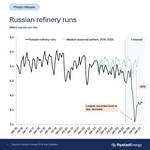
Following a year of tighter sanctions and Ukrainian attacks on refineries, ports and tankers, Russia’s crude output has fallen further in the second half of 2026, affecting the nation’s crude production outlook. Factoring in these disruptions, Rystad Energy has revised its Russian crude production forecast to average 8.95 million barrels per day (bpd) in 2026, before declining to around 8.6 million bpd in 2027. This represents a decline of 90,000 bpd compared with our previous forecast, reflecting the continued impact of renewed disruptions at western Russian export terminals and rising risks to seaborne exports, which have become less reliable and more expensive.
The nation also has little scope to absorb further supply disruptions, with onshore crude inventories already at levels where sustained production cuts become increasingly difficult to avoid. Even if operational constraints are eased, a meaningful recovery in output appears unlikely. A projected global oil surplus in 2027 is expected to pressure benchmark prices, eroding Russia's bargaining power with buyers while deep crude discounts, sanctions-related costs and lower sales volumes continue to weigh on producer revenues. Beyond the near term, the country's production outlook is becoming increasingly constrained as aging, high-water-cut wells remain offline for longer, reducing effective spare capacity,
Content Original Link:
" target="_blank">