



The rapid expansion of autonomous marine operations has created a challenge for research institutions, government agencies, and commercial operators alike. As missions become increasingly diverse, from environmental monitoring and hydrographic surveying to
The rapid expansion of autonomous marine operations has created a challenge for research institutions, government agencies, and commercial operators alike. As missions become increasingly diverse, from environmental monitoring and hydrographic surveying to defense exercises and subsea positioning, maintaining dedicated vessels for every application presents difficulties both financially and operationally.
Instead, many organizations are prioritizing modular uncrewed surface vehicles (USVs) capable of supporting multiple mission profiles through rapid payload reconfiguration. Rather than purchasing a new platform for every sensor or application, a single vehicle can adapt to changing operational requirements while minimizing logistics, training, and maintenance costs.
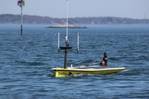
The University of Southern Mississippi (USM) is among the many institutions putting this concept into practice. Through its Marine Research Center, USM has employed SeaTrac Systems’ SP-48 USV across an expanding range of scientific, defense, and industrial projects, demonstrating how a modular platform can serve as a force multiplier across different missions.
A Platform Designed for Adaptability
Unlike traditional, mission-specific vessels, the SP-48 is designed around a modular architecture. Payloads can be integrated using multiple mounting locations, including a moon pool, dry payload bay, mast, or keel, allowing operators to quickly configure the vehicle for different sensors without fundamentally changing the platform itself.
This flexibility
Content Original Link:
" target="_blank">