



Timber carrier lists off Lebanon as rescue teams respond to water ingress
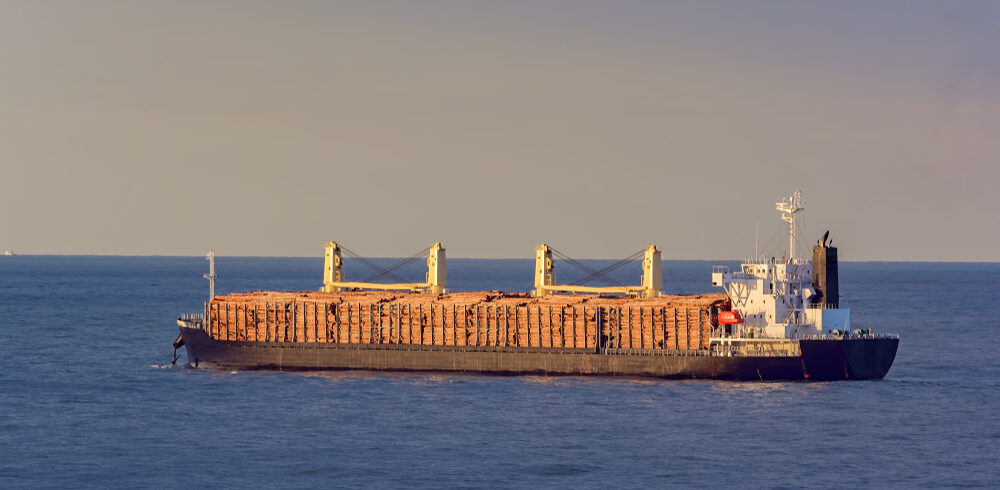
The general cargo vessel Seahorse, carrying timber, developed a significant list off the Lebanese port of Sidon on 25 October, prompting a maritime rescue operation.
Initial reports suggested that shifting cargo contributed to the incident, although subsequent accounts from rescue officials identified substantial water ingress aboard the vessel.
The Panama-flagged vessel reportedly encountered difficulties while approaching Sidon to discharge its timber cargo. Early Lebanese media reports indicated that an uneven distribution of timber had caused cargo to shift, leaving the vessel listing to port.
The vessel’s draft was reportedly increased to approximately nine metres, exceeding the port basin’s reported depth of eight metres. Initial accounts described the vessel as having run aground.
However, subsequent information from Lebanon’s Civil Defence indicated that water ingress had contributed to the loss of stability, with rescue teams undertaking pumping operations to reduce the accumulated water.
Seven people rescued as crews work to stabilise vessel
Lebanese Civil Defence and naval units were deployed to assist Seahorse, with the response continuing into October 26.
According to local reporting citing Civil Defence, seven people entered the water as the vessel’s condition deteriorated and were subsequently rescued.
In an October 26 update, Samir Yazbek, head of the Civil Defence Maritime Rescue Unit, said that the vessel’s situation was largely under control after pumping operations reduced the water level onboard from approximately 3.5–4 metres to around 60 centimetres.
The vessel had reached waters off Beirut, where response teams continued working to address the flooding and improve its stability.
Although the vessel remained listed, the authorities reported progress in stabilising its condition. The full extent of the damage and the precise sequence of events leading to the incident have not yet been established.
Timber cargo safety: Key practices
The incident draws attention to the importance of cargo distribution, securing arrangements and vessel stability when transporting timber.
- Maintain compact and secure stowage: Timber deck cargo should be tightly stowed and properly secured to minimise movement caused by vessel motion.
- Verify stability throughout the voyage: Masters should calculate the vessel’s metacentric height (GM) using the approved stability manual, accounting for possible moisture absorption and increased cargo weight.
- Inspect and tighten lashings: Securing arrangements should be checked regularly, particularly early in the voyage and before expected heavy weather, as cargo settlement can cause lashings to become slack.
- Assess cargo weight and structural limits: Decks, hatch covers and supporting structures must be capable of accommodating the intended loads, with restrictions in the vessel’s loading manual observed.
- Check securing equipment: Lashings, tightening devices and securing points should be suitable for the cargo, properly positioned and maintained in good condition.
- Maintain safe access: Personnel must be able to inspect securing arrangements safely, with appropriate access routes and emergency escape arrangements remaining available.
Content Original Link:
" target="_blank">