




The Clean Port Coalition has called on the European Commission to strengthen regulatory requirements for port electrification and shore power.
The Clean Port Coalition has called on the European Commission to strengthen regulatory requirements for port electrification and shore power.
In a joint letter published on November 24, the Clean Port Coalition (CPC), urges the European Commission to introduce more ambitious measures ahead of the upcoming review of the Alternative Fuels Infrastructure Regulation (AFIR).
The letter brings together 21 organizations, including Danish Shipping, the Norwegian Shipowners’ Association, DFDS, the Maritime Battery Forum, Corvus Energy and Transport & Environment.
According to the Coalition, electrification can help decarbonize port operations and shipping, particularly tugs, workboats, tankers and short-sea shipping, while improving air quality, reducing greenhouse gas emissions and limiting Europe’s dependence on imported fossil fuels.
The Coalition welcomes the European Commission’s Ports Strategy and Electrification Action Plan but stresses that regulatory ambitions must translate into infrastructure deployment.
Addressing barriers to port electrification
Although shore power installations, battery-electric vessels and terminal electrification are gaining momentum, several structural barriers continue to hinder wider adoption.
These include regulatory gaps, uncertainty over future electricity demand, limited standardization, uneven energy taxation, insufficient financing mechanisms, grid connection delays and inadequate energy storage capacity.
The Coalition considers the upcoming AFIR review a critical opportunity to establish infrastructure targets beyond 2030, providing greater certainty for long-term investment in port electricity networks.
Three recommendations to EU policymakers
Against this background, the Coalition calls on the European Commission to:
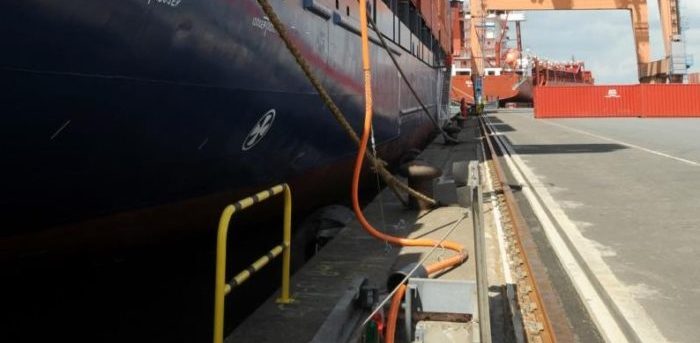
- Expand shore power deployment: Establish predictable regulatory requirements for onshore power supply (OPS) covering all vessels calling at EU ports, beginning with the most operationally feasible segments.
- Introduce battery charging infrastructure requirements: Ensure sufficient charging capacity to accommodate the growing fleet of battery-electric vessels operating in European waters.
- Develop ports as clean energy hubs: Prioritize and simplify grid access, accelerate energy storage deployment and introduce flexibility mechanisms to support the integration of port electricity infrastructure into wider power networks.
Beyond the AFIR review, the Coalition emphasizes the need for complementary measures, including supportive electricity grid frameworks and a broad carbon market, to make shore power economically competitive with fossil fuels.
As European ports evolve into hubs for clean energy production, storage and distribution, the Coalition argues that addressing infrastructure and regulatory bottlenecks will be essential to accelerating maritime decarbonization while strengthening European energy security and competitiveness.
Content Original Link:
" target="_blank">