



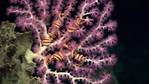
Marine scientists from Trinidad and Tobago recently conducted the first locally led and most comprehensive deep-sea survey of the islands’ surrounding ocean during an expedition aboard Schmidt Ocean Institute’s R/V Falkor (too).
Marine scientists from Trinidad and Tobago recently conducted the first locally led and most comprehensive deep-sea survey of the islands’ surrounding ocean during an expedition aboard Schmidt Ocean Institute’s R/V Falkor (too). During the month-long expedition in July, the team located over 25 active cold seeps, discovered 20 suspected new species, and mapped approximately 13% of the country’s marine territory.
The potential new species include an octopus first discovered during a 2014 expedition, in which the expedition’s Chief Scientist, Dr. Diva Amon, participated. The scientists did not have the required data to confirm whether it was a new species in 2014, but will be able to confirm this with the data collected on the latest expedition.
They also discovered corals, carnivorous sponges, and squat lobsters, among other animals. Over 700 specimens were collected, all of which will be housed at the Zoology Museum at the University of the West Indies, St. Augustine, in Trinidad and Tobago, increasing the size of the museum’s deep-sea collection twelve-fold.
“As the first locally led deep-sea expedition in Trinidad and Tobago’s history, these discoveries are proof that Caribbean scientists can uncover our own deep-sea backyard,” said Amon, who also serves as co-director of the non-profit
Content Original Link:
" target="_blank">