



Crew Welfare Week 2026: Mental health is a fundamental safety issue
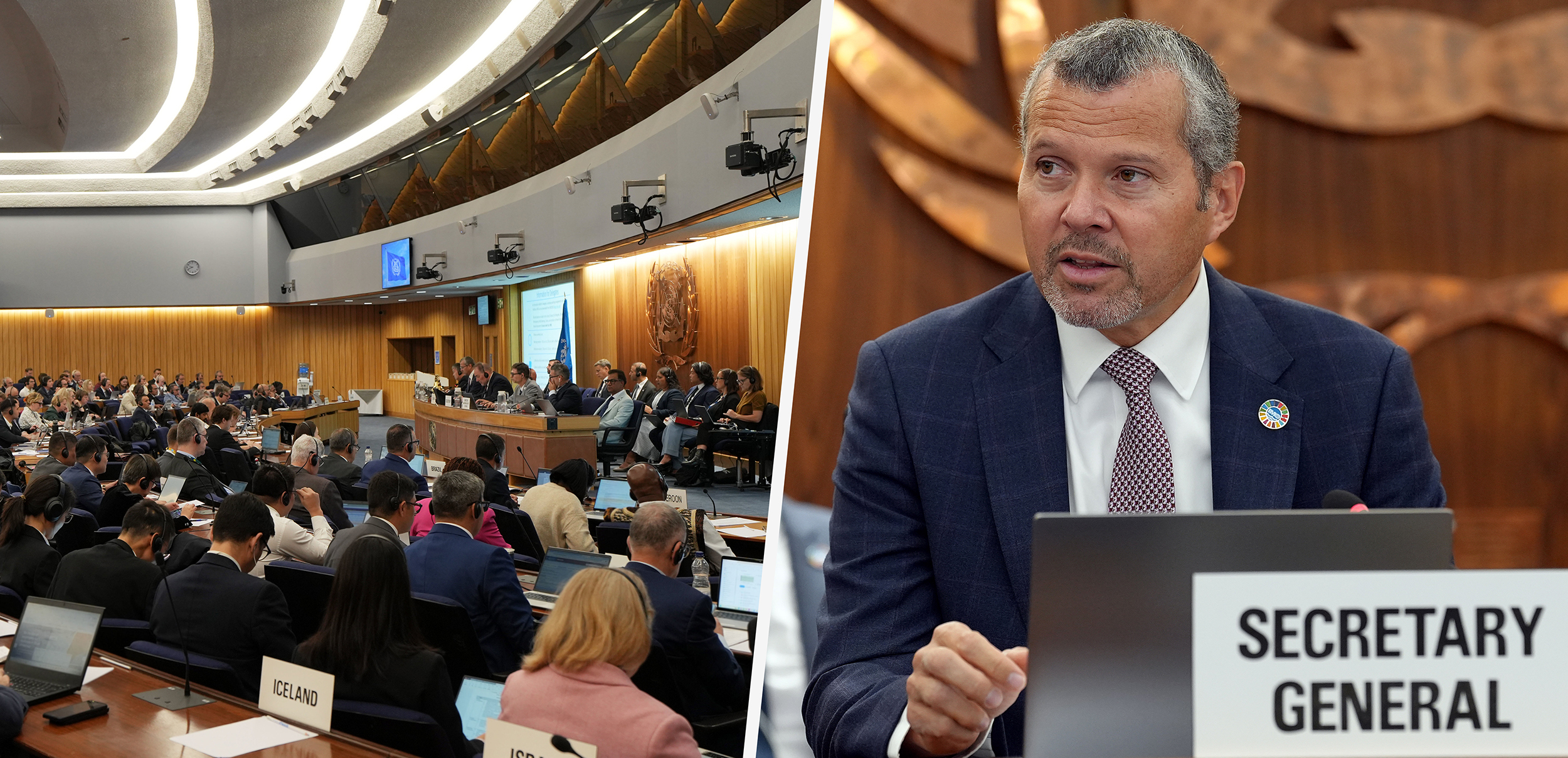
Mental health must no longer be treated as a “soft” welfare concern. It is directly connected to decision-making, operational safety, crew retention and business performance, experts stressed during a panel discussion at the 2026 Crew Welfare Week.
Although awareness has improved, stigma continues to prevent many seafarers from seeking support early. Speakers called on shipping to move beyond posters and reactive crisis services towards preventive, evidence-based measures that address leadership, fatigue, workload and the wider onboard culture.
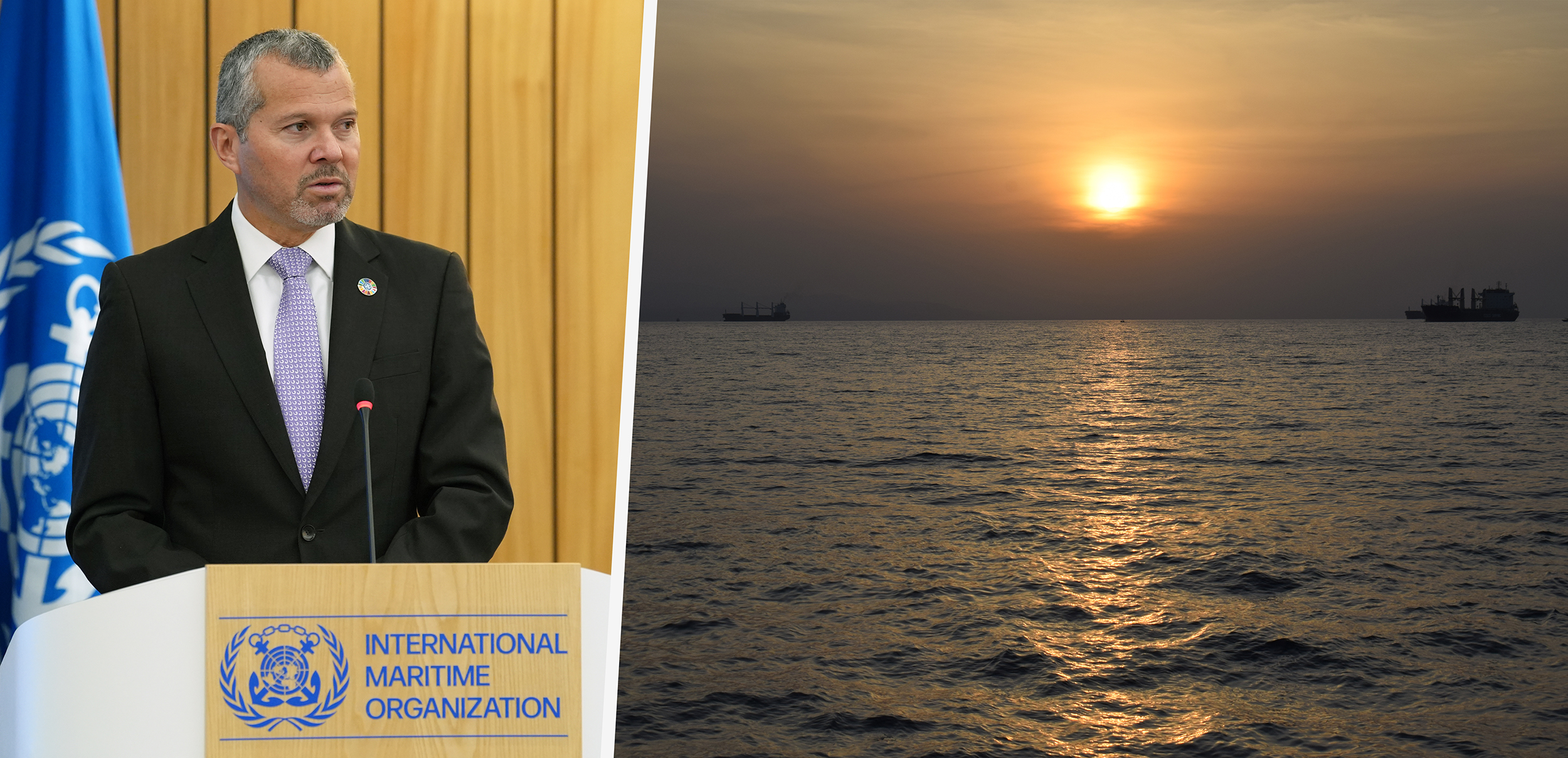
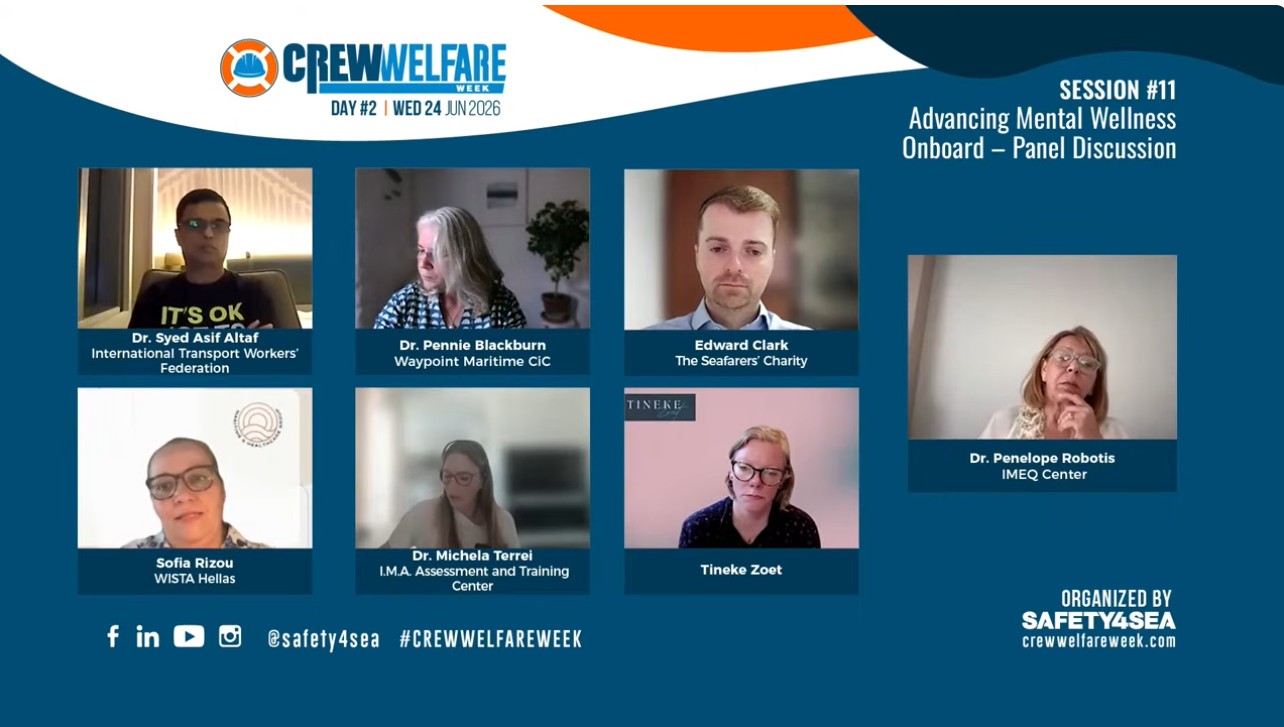
Moderated by Dr. Penelope Robotis, Chief Psychologist, IMEQ Center, the panel featured Dr. Syed Asif Altaf, Global Wellbeing Program Coordinator, International Transport Workers’ Federation; Dr. Pennie Blackburn, Director and Consultant Clinical Psychologist, Waypoint Maritime CiC; Edward Clark, Head of Communications, The Seafarers’ Charity; Sofia Rizou, Member, WISTA Hellas; Dr. Michela Terrei, Psychologist, I.M.A. Assessment and Training Center, Inc.; and Tineke Zoet, Maritime Workplace Coach.
10 industry actions identified by the panel to advance mental wellness onboard
#1 Treat mental health as a safety risk: Integrate psychological wellbeing into safety management, operational decisions and company performance indicators.
#2 Address stress and fatigue at source: Review workloads, working hours, manning arrangements and rest opportunities instead of placing responsibility solely on individuals.
#3 Conduct stress risk assessments: Introduce structured assessments and compliance plans to identify and manage psychosocial risks.
#4 Move beyond awareness campaigns: Support posters and communications with preventive programmes, operational changes and accessible professional services.
#5 Train senior officers: Equip masters, chief engineers and other leaders with communication, listening and early-intervention skills.
#6 Support the leaders themselves: Recognise the commercial and operational pressures facing senior officers and give them appropriate shore-based support.
#7 Build psychological safety: Ensure seafarers can raise concerns and acknowledge mistakes without humiliation, retaliation or damage to their careers.
#8 Protect confidentiality: Clearly communicate how personal information will be handled and ensure that seeking help does not threaten future employment.
#9 Improve mental health screening: Develop evidence-based psychometric tools tailored to seafaring, with safeguards against discrimination.
#10 Measure real outcomes: Track retention, help-seeking, fatigue, wellbeing and onboard culture to determine whether initiatives are producing meaningful change.
Mental wellness cannot stand alone
Opening the discussion, speakers emphasised that mental wellness cannot be separated from physical health, fatigue, communication, leadership and working conditions.
Rizou described a comprehensive approach combining 24/7 assistance, wellbeing training, critical-incident response and support for seafarers and their families. The objective, she explained, should not be limited to responding when someone reaches crisis point.
Behind every vessel, every operation and every KPI, there are human beings whose wellbeing directly impacts safety, performance and retention. Supporting mental wellness is not only the right thing to do; it is a critical operational priority.
.. she said.
Mental wellness must therefore be embedded into everyday operations and safety culture rather than presented as a separate company initiative.
Dr. Altaf similarly argued that decent working conditions should allow seafarers to be not only physically healthy but also fulfilled in their careers.
“We are always talking about the healthy seafarer, but sometimes we forget about the happy seafarer,” he said.
Awareness has increased, but outcomes remain concerning
The panel recognised that mental health is discussed far more openly than it was a decade ago. However, greater visibility has not necessarily produced measurable improvements in the everyday experience of seafarers.
Dr. Blackburn said the challenges affecting crews have not changed substantially, despite the growth of awareness campaigns, response services and industry initiatives.
“There is lots of awareness and lots of talk, but we are not seeing change in the statistics,” she warned. “I think something is not working, and we need to change our approach to mental health and wellbeing.”
Rather than concentrating primarily on resilience campaigns and response mechanisms, the industry should examine why distress arises and address the sources of the problem.
Clark described this as the need to tackle issues “upstream”. Helplines, port visits, pastoral care and access to confidential support remain vital, but they should be accompanied by advocacy, research and policy measures that prevent distress rather than repeatedly dealing with its consequences.
The aim should be to “cut systemic issues off at source rather than forever dealing with the symptoms of mental distress”, he said.
Stigma continues to delay help-seeking
Chronic stress, anxiety, fatigue, loneliness, family concerns and interpersonal tensions were among the most common problems identified during the discussion.
Rizou noted that distress does not always appear as an obvious mental health problem. It may instead become visible through disrupted sleep, irritability, low motivation, difficulty concentrating, physical symptoms or growing conflict among crew members.
Seafarers are also managing extended contracts, crew shortages, geopolitical uncertainty and concerns about their families and finances. Yet many still wait too long before asking for support.
Stigma has improved through the years, but it has not disappeared. Many crew members still worry that asking for help may be perceived as weakness or could affect their career progression.
..Rizou said.
She identified three priorities: normalising conversations, investing in leadership and shifting from reactive assistance towards prevention.
Zoet added that older seafarers may be particularly likely to remain silent and continue working through serious difficulties. While this may be interpreted as resilience, it can make warning signs harder to identify.
“That is the danger of staying silent and not having a psychologically safe environment,” she said. “The breakdown can happen suddenly, and you do not see it coming.”
Mental health is a safety and business issue
The panel strongly rejected the idea that mental health sits outside core ship operations.
Dr. Altaf explained that excessive stress can affect concentration and prevent a seafarer from making the right decision at the right time. For masters, chief engineers, officers and ratings, the consequences can extend to accidents, operational disruption and financial loss.
It is not just a welfare matter. It is a business matter. Seafarers’ mental health and wellbeing are directly related to safety, operations and profitability.
… he said.
Healthy and supported people are better able to concentrate, assess risks and respond effectively under pressure. Mental wellness should therefore be integrated into the way companies manage operational and safety performance.
Dr. Blackburn agreed that stress and fatigue have become dangerously normalised.
Everybody says it is stressful being a seafarer, as if that makes it okay. It does not make it okay
…she said.
Stress and fatigue increase the likelihood of distraction, ineffective performance, poor decisions and accidents. Companies should consequently treat psychological health with the same seriousness as other workplace risks, including through stress risk assessments and appropriate compliance plans.
“We really need to shift our mindset from it being a soft issue to it being a health and safety issue,” Dr. Blackburn stressed.
Posters alone will not change onboard culture
The panel acknowledged the value of awareness campaigns but warned against mistaking communication materials for meaningful change.
A poster on the bridge is not enough. It is one thing to tell people to speak up and another thing to sail on a ship where the culture does not support them.
…Zoet said.
Company policies can state that mental health matters, but seafarers judge those policies by their daily experience onboard. Meaningful change requires investment, consistent behaviour and leadership ashore and at sea.
Zoet added that some organisations continue to see mental health as an isolated “soft factor” rather than recognising its connection with vessel safety and the potentially substantial consequences of an accident.
Senior officers shape psychological safety
Leadership emerged as one of the strongest influences on crew morale and psychological safety.
Dr. Altaf distinguished between company leadership and the leadership seafarers experience onboard. An organisation may have strong policies, but those policies can have limited meaning if masters, chief engineers and other senior personnel do not apply them in practice.
“Leadership is not just the company,” he said. “Leadership is onboard, where the seafarer is living for six or nine months.”
Senior officers should be accountable for taking proactive steps to support wellbeing rather than simply receiving instructions from shore.
Clark noted that many senior officers are willing to help but may not have the necessary skills. Their leadership responsibilities have evolved, while promotion has traditionally been based primarily on technical competence.
“Strong leaders are those who not only want to help but can recognise their own shortcomings and develop the skills they need,” he said.
Leadership and management training can help officers communicate effectively, recognise concerns and feel better prepared to support crew members experiencing difficulties.
Dr. Blackburn added that morale onboard is heavily influenced by the master and senior officers. They model professionalism, problem-solving and self-care, influence social interaction and monitor the effect of workloads and working hours.
However, senior personnel are themselves exposed to commercial and operational pressures.
“We also need to think about how we support senior leaders onboard so that they can be good leaders for everybody else,” she said.
Zoet called for a more empathetic and human-centred leadership model. At the same time, she cautioned that empathy cannot flourish if leaders are overwhelmed by fatigue, workload and constant operational pressure.
“If fatigue and mental workload are not addressed, you cannot build empathic leadership either,” she warned.
Can crew members admit mistakes safely?
Psychological safety means more than offering access to a helpline. It requires an environment in which people can report a concern, admit a mistake or discuss a personal difficulty without fear of humiliation or retaliation.
Dr. Terrei suggested that onboard leaders ask themselves a direct question:
“Is the crew able to express a mistake without being criticised or humiliated?”
The ability to disclose mistakes and problems contributes to a healthy onboard climate. Without it, stigma and commercial pressure can discourage communication and ultimately create wider safety risks.
A gap in mental health screening
The effectiveness of pre-employment mental health screening was also questioned.
Dr. Terrei argued that some commonly used tools are not designed to identify whether someone is experiencing a current mental health difficulty that could affect their fitness for a particular assignment.
She described this as a potential “hole in the system” and called for more appropriate, tailored psychometric tools.
Such assessments should not be used to discriminate against people experiencing mental health problems. Instead, the objective should be to identify risks responsibly and ensure that seafarers receive appropriate support before joining a vessel.
Retention is an industry warning sign
Mental wellness also has serious implications for the future maritime workforce.
Dr. Altaf said that experienced seafarers are now less likely to encourage their children to pursue maritime careers, while some younger personnel plan to move ashore after only a few years.
In the past, a young seafarer wanted to become a captain or chief engineer.Now the turnover rate is so high that after five or seven years, many want to come back ashore.
… he said.
Unless working conditions and wellbeing improve, the result could be a growing shortage of qualified and experienced seafarers.
Geopolitical crises may intensify that trend. Clark warned that seafarers exposed to conflict and prolonged uncertainty may carry psychological consequences long after media attention has moved elsewhere.
Explore more by watching the video herebelow:
Content Original Link:
" target="_blank">